What is a Data Center?
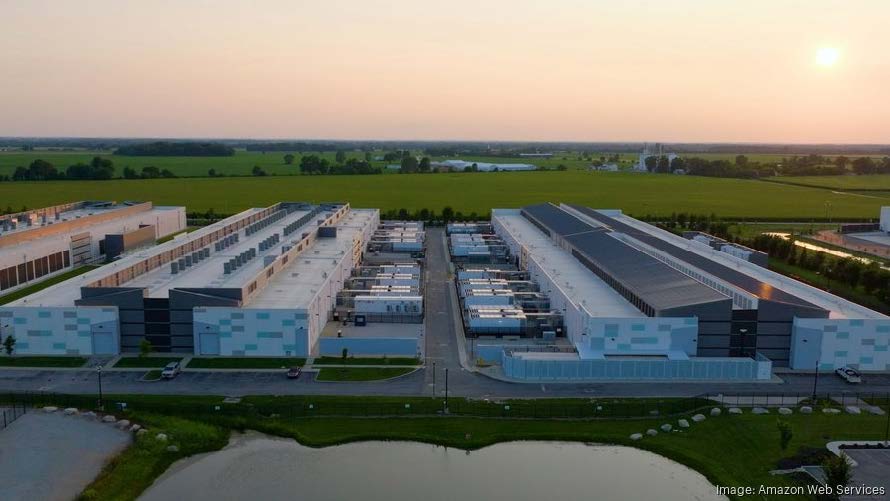
Data Centers are facilities that store, process, and secure digital information. They support everyday services like banking, healthcare, cloud computing, education, and emergency systems.
There are 3 types of data centers:
Hyperscale Data Centers
are large facilities built to support cloud computing at global scale. They are the backbone of AI, cloud, streaming, and apps.
Enterprise Data Centers
are are private, in-house data centers built to support one organization’s internal needs. Honda operates one locally.
Colocation Data Centers
are are owned by a third-party provider. Companies rent space (racks, cages, or suites) instead of building their own data center.
.jpg)
Myths Vs Facts
Myths
Data centers do not pay taxes.
Data centers strain schools and public services.
Data centers create no economic value.
Agricultural land is permanently lost with no community benefit.
Data centers are temporary or speculative.
Facts
Data centers pay taxes through PILOTs, property taxes, and other local payments, exceeding residential & agricultural taxes.
Data centers do not add students, generate minimal service demand, and still contribute revenue.
They provide large capital investment, long-term tax revenue, and infrastructure improvements.
Conversion results in higher long-term revenue, improved infrastructure, and economic diversification.
These facilities are designed for decades of operation and require significant upfront investment.
Community Benefits
Benefits
Large, long-term capital investment.
Reliable tax payments over time.
Less sensitive to economic cycles and difficulties.
Minimal traffic after construction and no demand on schools.
Infrastructure improvements.
Brings new life to hard-to-market sites.
Details
Investment is typically hundreds of millions or billions of dollars.
Tax payments exceed prior agriculture property tax and data centers diversify our tax base, reducing tax burden on residents.
As seen prior, data centers are critical to a variety of sectors and services our society uses daily.
Data centers add jobs, but fewer than typical mega projects, reducing traffic and education burden on the community.
Infrastructure improvements often come with the site, supporting future growth, and taxes fund other infrastructure and services in our community.
Data centers can locate on hard to access or odd shaped sites.
Community Challenges
Concern
Provision of water.
Provision of electricity.
Noise concerns.
Design/look of data centers.
Landscape buffering
Solution
The City of Marysville limits the amount of water data centers can use and charges additional fees for large users. Water cooling is only used 3% of the year.
AES Ohio and URE are working with data centers to manage the burden on our 13-state PJM grid. Large users anywhere in the PJM grid impact our community.
Jurisdictions should ensure noise buffering design is incorporated through the development review process.
Data centers look like many standard industrial multi-tenant buildings.
Jurisdictions should ensure effective buffering during the development review process.
Top Taxpayers in Union County: 2025
Corporate
Utility

The AI Race:
USA vs China
AI is a Strategic National Asset The United States and China are competing to lead in artificial intelligence, which has major implications for economic growth, national security, and global influence. Some have dubbed this race “the new cold war” How Does This Relate to Data Centers? Advanced AI depends on high-performance data centers with reliable power, fiber connectivity, and secure infrastructure The scale and speed of data center development directly affect how fast a country can innovate in AI USA-based data centers keep AI data and intellectual property onshore Expanding data center capacity helps ensure the USA remains competitive against Chinese AI investment.
Jobs
Construction Phase Large projects have upwards of 500 construction jobs during construction. Operation Phase Data centers typically have 25-50 full time positions, plus an additional 25- 50 contractor positions (such as security, maintenance, staffing, etc.) supporting full time employees. Upkeep Servers are replaced every 5-6 years, bringing back construction jobs during that time.
Key Takeaway: Data centers bring a mix of white collar and blue collar jobs to our community. These jobs result in increased spending in Union County, from hotel stays to restaurants, boosting the entire economy.
%20Large.jpeg)
Conclusion
Land transitions from agricultural land to developed use, ensuring a significant increase in taxes PILOTs provide predictable, guaranteed payments Increased land value strengthens the long-term tax base Infrastructure improvements support future growth There needs to be consideration of the total impact to communities There needs to be consideration of development standards We will continue to work with developments that are more lucrative to taxing authorities We will ensure developments have a net benefit to the community
.avif)