What is a Data Center?
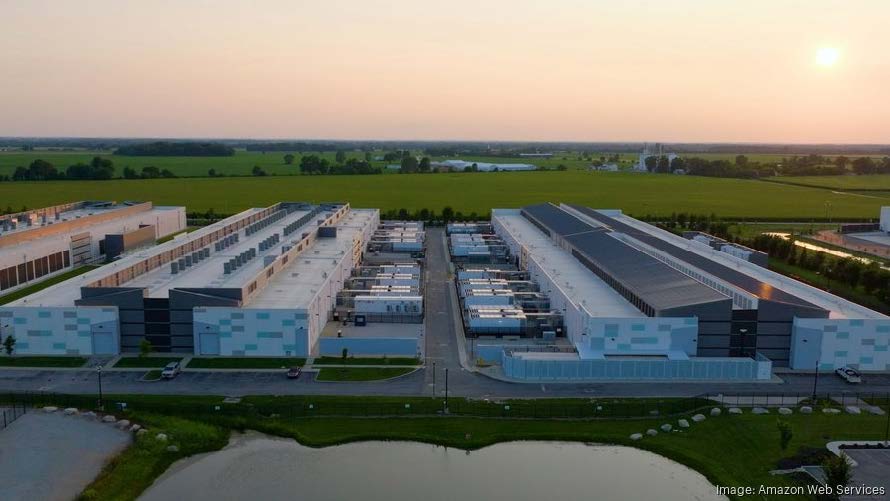
Data Centers are facilities that store, process, and secure digital information. They support everyday services such as banking, healthcare, cloud computing, education, artificial intelligence, government operations, and emergency systems. Advanced AI and cloud computing relies on data centers with reliable power, connectivity, and security.
There are 3 types of data centers:
Hyperscale Data Centers
Large facilities built to support cloud computing and artificial intelligence on a global scale. They serve as the backbone of cloud platforms, AI systems, streaming services, and digital applications.
Enterprise Data Centers
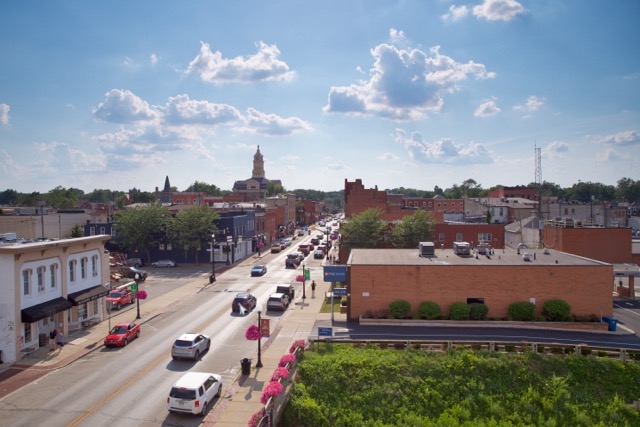
Private, in-house data centers are built to support a single organization's operations. Honda operates an enterprise data center locally.
Colocation Data Centers
Facilities owned by third-party providers where organizations rent racks, cages, or suites rather than constructing their own data center.
.jpg)
Myths Vs Facts
Myths
• Data centers do not pay taxes.
• Data centers strain schools and public services.
• Data centers create no economic value.
• Agricultural land is permanently lost with no community benefit.
• Data centers are temporary or speculative.
Facts
Data centers pay land taxes (which are never abated), PILOT payments, property taxes, and other local fees. Their effective tax burden is approximately 75%, and data center properties are often valued two to four times higher than traditional industrial facilities.
Data centers do not generate student growth and create minimal demand for public services while still generating significant local revenue. A single project generating $2.5 million annually can represent approximately 9.2% of a school district's budget.
Data centers drive billions of dollars in investment, create construction and operational jobs, and provide long-term local revenue. Ohio has attracted approximately $39.9 billion in data center investment.
Development converts low-tax agricultural property into significantly higher-value property, generating long-term tax revenue, infrastructure improvements, and economic diversification.
Data centers are long-term facilities designed to operate for decades and require significant upfront capital investment. Equipment is continuously upgraded every 3–6 years, creating ongoing economic activity.
Community Benefits
Benefits
• Large, long-term capital investment.
• Reliable tax payments over time.
• Less sensitive to economic cycles and difficulties.
• Minimal traffic after construction and no demand on schools.
• Infrastructure improvements.
• Brings new life to hard-to-market sites
Details
Data center investments are typically hundreds of millions or billions of dollars.
Tax payments exceed previous agricultural taxes and help diversify the local tax base, reducing pressure on residents.
Data centers support critical sectors including healthcare, banking, education, government, AI, and cloud computing.
Data centers create jobs while generating significantly less traffic and school enrollment than many large-scale developments.
Projects often include road, utility, and infrastructure upgrades that support future growth.
Data centers can successfully locate irregularly shaped or difficult-to-develop parcels.
Community Challenges
Concern
• Provision of water.
• Provision of electricity.
• Noise concerns.
• Design/look of data centers.
• Landscape buffering
Solution
The City of Marysville limits data center water usage to 50,000 gallons per day and charges additional fees for large users. Water cooling is generally used for only about 3% of the year. Marysville residents use approximately 1.6 million gallons per day watering lawns.
AES Ohio, Union Rural Electric, and PJM work with developers to plan for increased electrical demand and maintain grid reliability.
Development review processes should incorporate noise buffering and mitigation measures.
Design standards, architecture, landscaping, and screening can ensure compatibility with surrounding areas.
Effective landscape buffers and screening should be incorporated through the development review process.
Water Usage
Marysville Water Supply
• Water use is one of the most common concerns regarding data centers.
• Approximately 10,163 households are served by Marysville's water system.
• Lawn irrigation consumes approximately 1.6 million gallons per day.
• Irrigation accounts for approximately 42.1% of the city's water use.
• A Marysville data center is limited to 50,000 gallons per day.
Usage Comparison
- Marysville Data Center
- City of Marysville Lawn Watering
- All U.S. Data Centers
- All U.S. Car Washes
- Americans Showering
- California Almond Farms
- 50,000
- 1,600,000
- 46,000,000
- 480,000,000
- 2,024,405,865
- 4,700,000,000
Electricity Usage
Myth
• Data centers waste energy.
• Data centers are not sustainable.
• Data centers use too much electricity.
• Data centers negatively impact local power systems.
• Data centers drive up electricity prices.
Facts
Modern hyperscale facilities lead the industry in Power Usage Effectiveness (PUE), meaning most energy is used directly for computing.
Many new data centers utilize solar, wind, and hydroelectric energy and pursue carbon-neutral operations.
Data centers account for approximately 4.4% of U.S. electricity consumption.
Energy demand associated with data center growth has contributed to maintaining generation assets and related jobs in some regions.
Large customers can help strengthen grid economics and support future utility investments.
Top Taxpayers in Union County: 2025
Corporate
Utility

The AI Race:
USA vs China
AI is a Strategic National Asset
The United States and China are competing to lead in artificial intelligence, with implications for economic growth, national security, and global competitiveness.
How Does This Relate to Data Centers?
Advanced AI depends on high-performance data centers with reliable power, fiber connectivity, and secure infrastructure.The speed of AI innovation is directly tied to the availability of computing infrastructure.U.S.-based data centers help keep data, intellectual property, and computing resources onshore.Expanding domestic data center capacity helps maintain American leadership in AI and emerging technologies.
Jobs
Construction Phase
Large projects can support more than 500 construction jobs during development.
Operation Phase
Data centers typically support:25–50 full-time employees25–50 additional contractor positionsincluding security, maintenance, and technical support services.
Upkeep
Servers and equipment are upgraded every 3–6 years, creating additional contracting and construction opportunities throughout the facility's life cycle.
Key Takeaway
Data centers provide both white-collar and skilled-trades employment while generating spending throughout the local economy, including hotels, restaurants, suppliers, and service providers.
%20Large.jpeg)
Conclusion
Land transitions from agricultural land to developed use, ensuring a significant increase in taxes PILOTs provide predictable, guaranteed payments Increased land value strengthens the long-term tax base Infrastructure improvements support future growth There needs to be consideration of the total impact to communities There needs to be consideration of development standards We will continue to work with developments that are more lucrative to taxing authorities We will ensure developments have a net benefit to the community
.avif)